Gelyus Bayazitov: "The most important thing today is reducing costs and maintaining positive momentum and economic efficiency in the livestock industry."
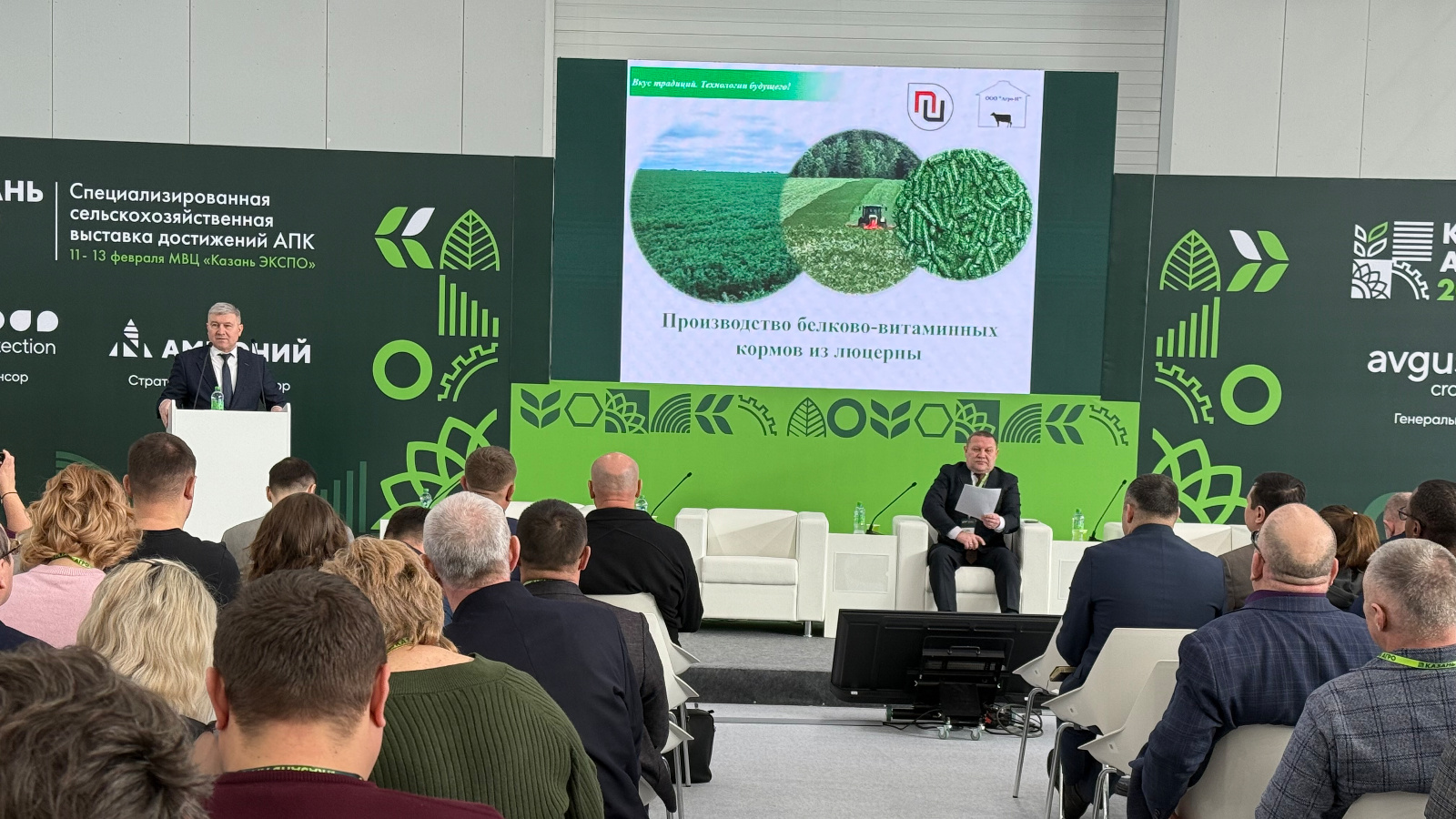
A roundtable discussion on "Livestock" was held at the Kazan Expo IEC as part of the specialized agricultural exhibition "Kazan Agro-2026."
The event was attended by Gelyus Bayazitov, Deputy Minister of Agriculture and Food of the Republic of Tatarstan, representatives of the Ministry of Agriculture and Food of the Republic of Tatarstan, heads of agro-industrial enterprises from Tatarstan and other republics, heads of the Department of Agriculture and Food of the Republic of Tatarstan, researchers, and leading experts in cattle feeding and livestock production. The event brought together over 160 people.
During the roundtable, participants discussed a variety of topics related to feeding, cattle digitalization, common animal diseases, and more.
The Deputy Minister summarized the livestock sector's performance in 2025 and outlined the current year's objectives: "The Republic of Tatarstan fully meets the population's livestock production needs: 161% of milk, 118% of meat, and 132% of eggs," noted Gelyus Bayazitov.
According to the livestock sector's performance in 2025, production exceeded 204 billion rubles. 524,000 tons of meat and over 1 billion 636 million eggs were produced. 2,378,000 tons of milk were produced. Cow productivity increased to 8,873 kg.
According to Gelyus Bayazitov, greater attention should be paid to optimizing technological processes and revising the structure of rations. "The most important thing today is to reduce costs and maintain the positive dynamics and economic efficiency of the industry," he added.
Alexander Ovchinnikov, Deputy General Director for Production at Semenovsky Breeding Farm CJSC in the Mari El Republic, discussed feed production and the company's key performance indicators for 2025. He discussed in detail the nutritional value of bulk feed and how to preserve grass-based feed through moisture and acidity. He also touched on the topic of feed cost recovery.
Pyotr Churin, head of a peasant farm in the Republic of Tatarstan, discussed the profitability of dairy farming in the face of falling prices and spoke on the topic: "How to Maintain Milk Production Profitability in 2026 Market Conditions: Using a Family Livestock Farm as an Example."
"Under these prices, dairy producers are forced to reconsider their approaches to animal feeding. The main objective is to maintain production economics and at least achieve an operating profit. This primarily involves revising the diet, determining how to reduce costs, and which purchased components can be replaced with more affordable ones," he emphasized.
Next, Lumir Grussman, an investor at Zakroma LLC, discussed the optimization of cattle feed rations. "A modern, successful farm consists of several key aspects: comfort, genetics, and the microbiome. A high-quality ration is essential for successful future reproduction. It is essential to establish good logistics and ensure timely vaccination of animals," he noted.
Then, the CEO of Agro-Neptune LLC discussed the production of protein-vitamin feed from alfalfa. He discussed the acreage structure of the main haylage and silage crops, including alfalfa, triticale, and corn, as well as the key indicators for the gross production of alfalfa pellets at Agro-Neptune LLC's BVK facility.
The participants also discussed the cattle herd management program, preventative measures, indications for and adjustments to vaccination schedules, sanitation checkpoints, milking and feeding, and the company's own feed base for maintaining stable milk fat content.