The Ministry held a training session for the "Avyl Yashi — A Village Lives" project.
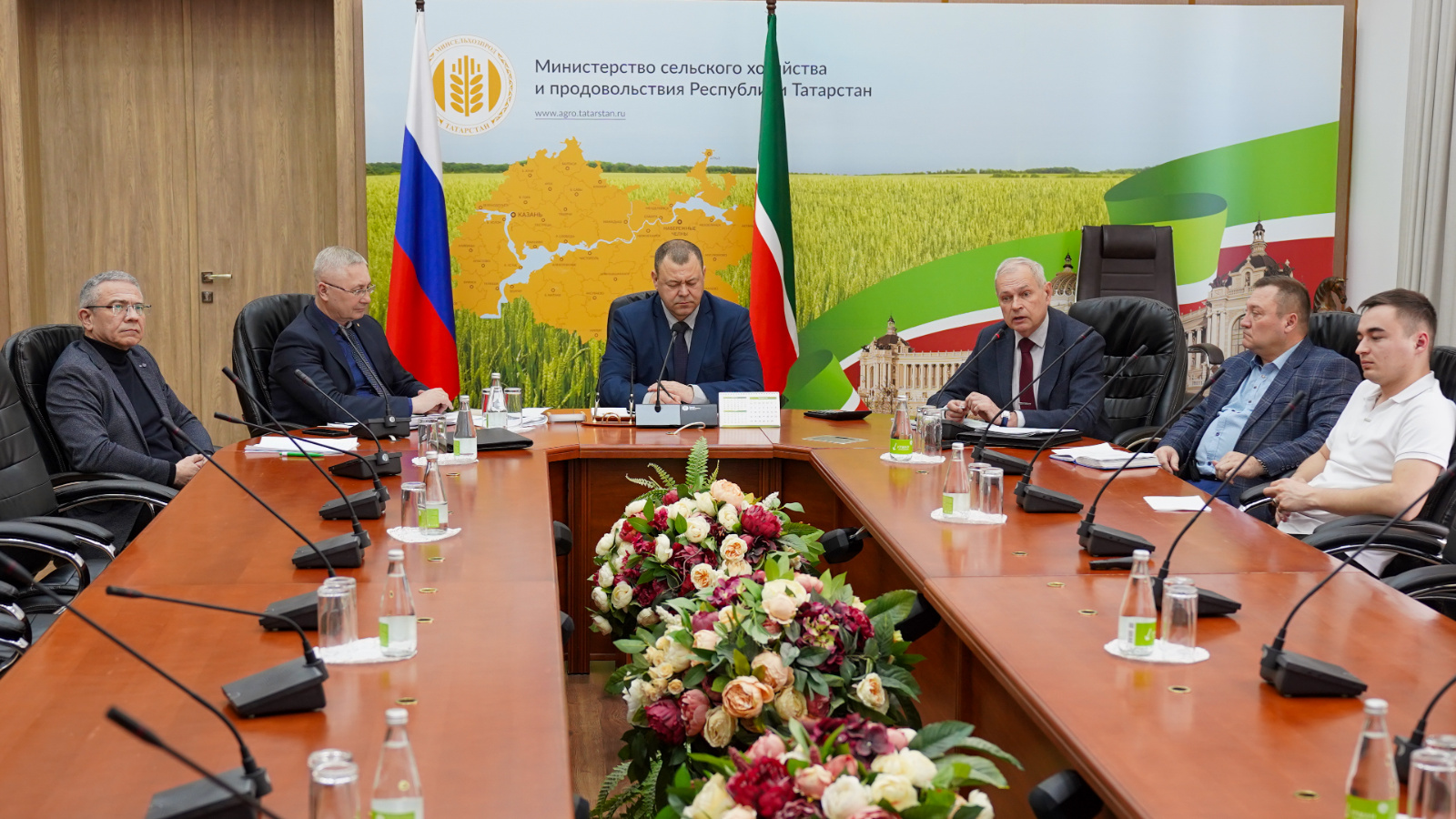
Today, the Ministry held the 12th training session of the "Avyl Yashi — A Village Lives" project. Participants discussed current issues of local self-government and innovations in state support for small farms.
Participating were Alexander Molokin, Head of the Small Business Development Department; Sergey Stolyarov, Deputy Executive Secretary and Head of the Legal Department of the Association "Council of Municipalities of the Republic of Tatarstan"; Arkady Semenychev, Deputy Executive Secretary of the Association "Council of Municipalities of the Republic of Tatarstan"; Niyaz Akhmadullin, Editor-in-Chief of the "Local Self-Government in Tatarstan" magazine; and representatives of agricultural and food departments in municipal districts and rural settlements.
The project is being implemented at the initiative of the State Council Committee of the Republic of Tatarstan on Ecology, Nature Management, Agro-Industrial and Food Policy and aims to preserve and revive villages, increase the competitiveness of small and medium-sized businesses, and create an information and methodological base for various agricultural sectors.
Sergey Stolyarov emphasized that significant changes have been made to local government legislation. He discussed Federal Law No. 33-FZ of March 20, 2025, "On the General Principles of Organizing Local Self-Government in a Unified System of Public Authority." "Starting in 2027, when this law finally comes into force, the local issues we are accustomed to will be called powers to directly support the livelihoods of the population. The main point is that the Russian Federation as a whole is transitioning to a single-tier system of local self-government. "While we currently have a two-tier system in the republic, with the lower tier being rural and urban settlements, and the second tier being municipal districts and urban okrugs, this law will establish a single-tier system of local self-government in the Russian Federation as a whole," he added.
Arkady Semenychev spoke about significant municipal support programs, including attracting additional resources to local budgets through the introduction of citizen self-taxation and grants to rural and urban settlements.
Niyaz Akhmadullin urged the heads of rural settlements to pay greater attention to publicizing events and the results of their work. "Our rural settlements, districts, urban entities, and cities in the republic have indeed achieved very good results and experience. We are analyzing the information channels and resources available to you," he said.
Alexander Molokin added that promoting the rural lifestyle is essential. "One of the objectives of any rural settlement's charter is to promote the development of rural entrepreneurship, which contributes to the development of rural areas and the growth of local budget revenues," he emphasized.
Alexander Molokin also reported that small businesses will generate 160 billion rubles in gross agricultural output in 2025, a 6% increase from 2024.
Budget support of over 1.8 billion rubles is planned for 2026. "There are also significant changes, particularly in federal areas, including the Agrotourism grant, which is up to 10 million rubles. Also, starting this year, subsidies of up to 5 million rubles will be introduced to reimburse expenses incurred in developing rural tourism. There are also subsidies for cooperatives to partially reimburse the costs of purchasing produce, machinery, equipment, and other assets," Molokin added.