A new agrotechnology classroom has opened in the Mamadysh district.
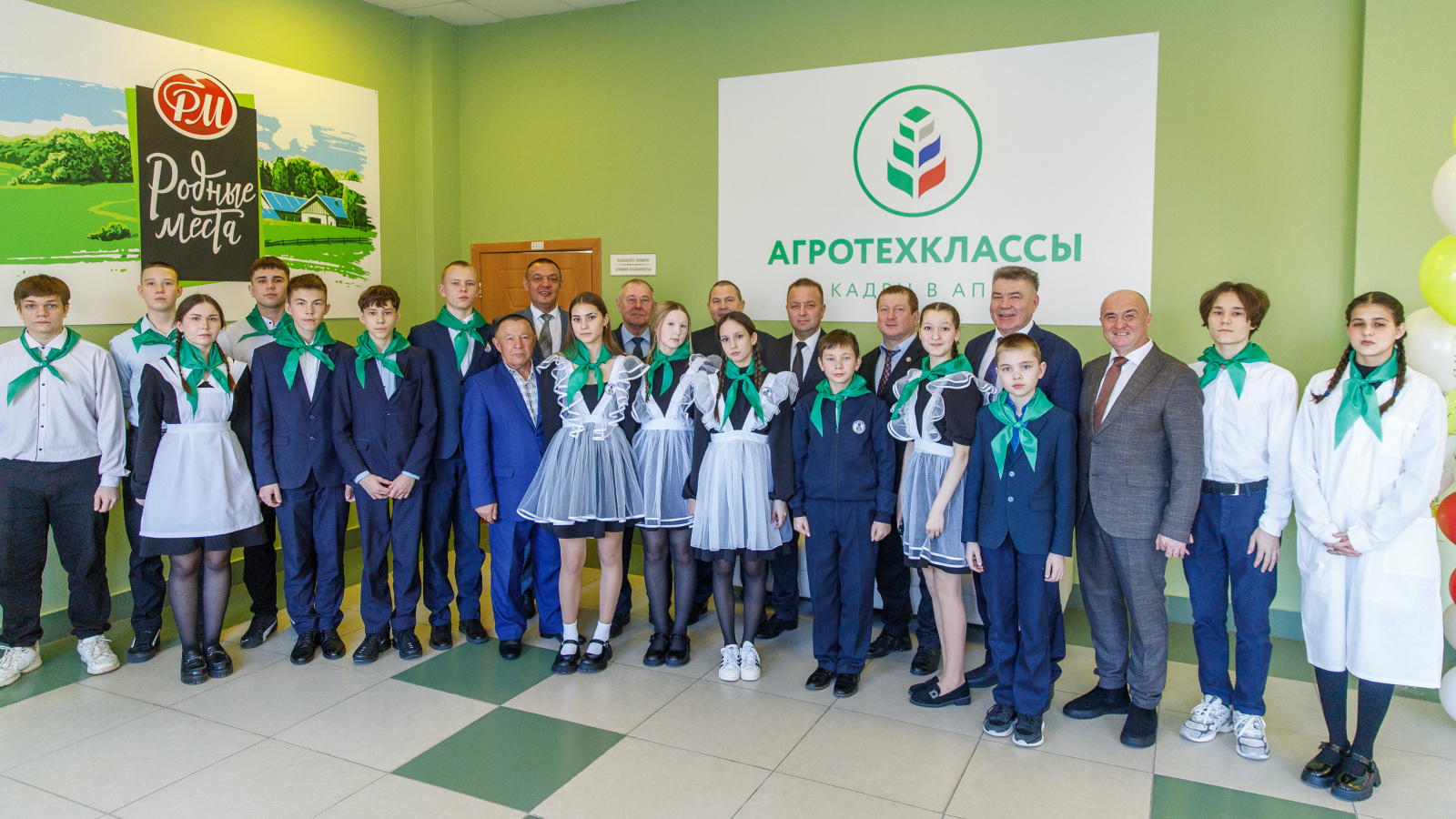
Today, Lenar Garipov, First Deputy Minister of Agriculture and Food of the Republic of Tatarstan, opened an agrotechnology classroom in the Mamadysh municipal district of the Republic of Tatarstan. The event was attended by Vadim Nikitin, head of the district, Ilshat Nuriyev, acting rector of the Kazan State Agricultural University, and Rifat Mutigullin, CEO of the RM Agro group of companies.
A new agrotechnology classroom specializing in agricultural engineering for grades 7 and 9 has opened at Mamadysh Secondary School No. 3. Students will study chemistry, biology, physics, and mathematics as core subjects, and will also take elective courses in agrotechnology.
"The opening of each agricultural classroom is the result of the collaborative work of teachers, agricultural enterprises, and, of course, the significant support of the Ministry of Agriculture of the Russian Federation and the Tatarstan Regional Agricultural Council. We are grateful to the investors for their support of the project and express special gratitude to the agricultural classroom teachers, whose contribution to the development of agricultural education will be encouraged," noted Lenar Garipov.
The agricultural classroom in the district was established in 2021, but in 2025, thanks to the investor RM Agro Group and the federal project "Personnel in the Agricultural Sector" of the national project "Technological Support for Food Security," we were able to equip the classroom with state-of-the-art technological equipment.
Children will have access to new digital labs in physics, chemistry, and biology, sets of educational and laboratory equipment for physics and biology, training simulators, electrical workbenches, an electronic periodic table of chemical elements, sets of visual aids, and display stands.
"The opening of the agricultural classroom is the first and crucial step in building a talent pool for the industry. I am confident that, combined with existing municipal programs, this project will yield tangible results. We will be able to raise a generation of young people who will not only want to remain in their native land but will also possess the necessary competencies for professional fulfillment in the agricultural sector. This will be the key to the sustainable development of our region and strengthening food security," noted Vadim Nikitin.