Achieving Technological Leadership in the Russian Agricultural Industry Discussed at Golden Autumn
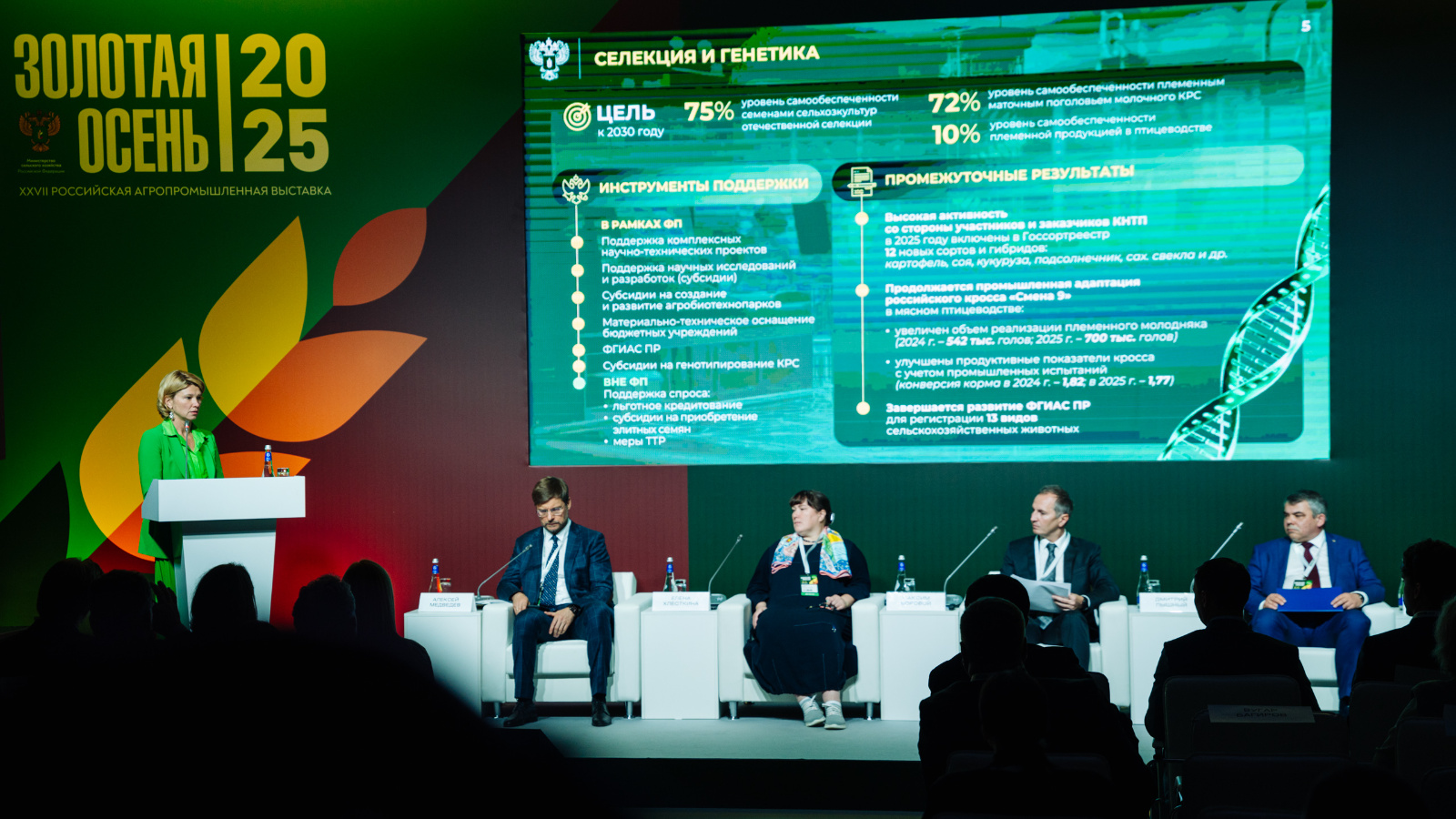
A meeting of the State Council Commission on Technological Leadership was held on the sidelines of the Golden Autumn Russian Agricultural Exhibition. The event was attended by Mikhail Kotyukov, Chairman of the Commission and Governor of Krasnoyarsk Krai; Oksana Lut, Minister of Agriculture; and representatives of federal and regional agencies, businesses, and the scientific community.
The event was held as a pitch session. Topics of discussion included the implementation of the national project "Technological Support for Food Security," research results in crop and livestock production, and personnel training for the agricultural sector.
Mikhail Kotyukov: "Our shared goal is to identify areas where we respect our sovereignty and areas where we are ready to challenge the world and create a product that no one else has. We must understand which varieties, mineral fertilizers, biopreparations, and animal breeds will become our champions in the global market." Furthermore, while ensuring food security, we must not under any circumstances reduce the level already achieved; the quality of the seeds and hybrids being developed must be improved. Regarding personnel issues, educational programs must be modernized to train specialists who will be in demand. It is important for us to find a niche that will provide everything necessary for the Russian production of a unique product on the market."
Russian Agriculture Minister Oksana Lut noted that by 2030, the country should be 75% self-sufficient in domestically bred seeds, 72% self-sufficient in dairy cattle breeding stock, and 10% self-sufficient in poultry breeding products. During the meeting, scientists discussed effective genomic selection tools in dairy and beef farming, as well as achievements in the development of competitive hybrids of spring rapeseed, sunflower, and sugar beet. Sugar beet is one of the most challenging varieties to breed, but Russian specialists plan to develop unique hybrids of this product and introduce them to the market by 2030. The meeting participants focused on discussing a unified digital platform for analyzing the breeding process. This platform will enable forecasting research results and reducing the time it takes to develop new varieties. Leading scientific institutes in the country have already joined the project.
During the meeting, university leaders and business representatives shared their collaborative experiences, which have enabled both sides to quickly respond to production challenges and modernize educational programs for training personnel for the industry. Preparation begins in school. More than 600 agricultural technology classes are already operating in 67 regions, attended by over 9,000 schoolchildren. The plan is to double their number next year, reaching 18,000 by 2030. At the same time, new educational programs are being developed, tailored to the actual needs of the agricultural sector.
This year, under the national project "Technological Support for Food Security," agricultural classes will be opened in 20 schools across the Republic of Tatarstan, where 550 children will study and gain insight into agricultural professions.