Tatarstan farmers granted access to a network of agrometeorological stations
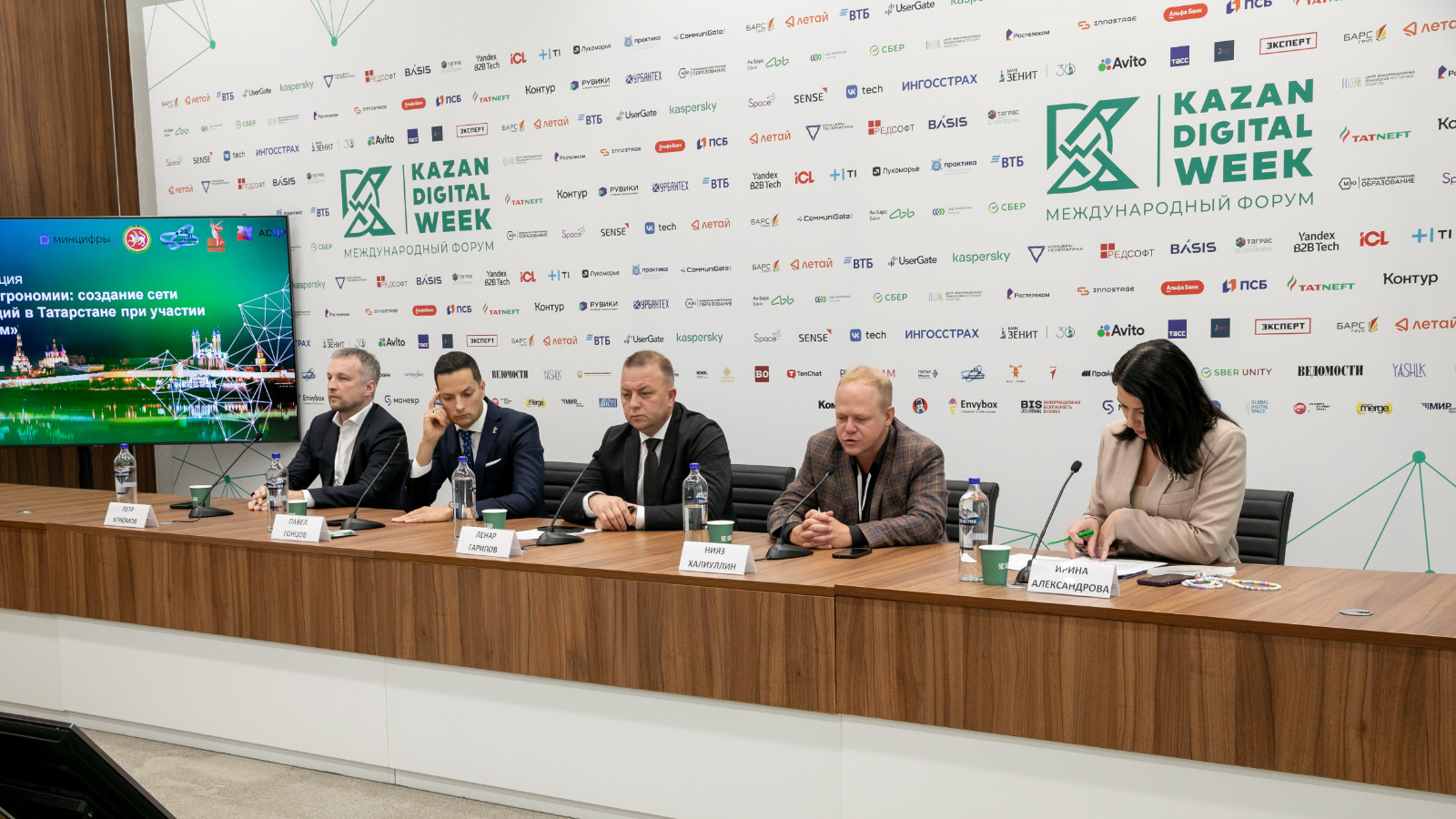
A press conference entitled "Innovations in Agronomy: Creating a Network of Agrometeorological Stations in Tatarstan with the Participation of PJSC Rostelecom" was held today as part of the Kazan Digital Week 2025 International Forum.
Participating were Lenar Garipov, First Deputy Minister of Agriculture and Food of the Republic of Tatarstan; Pavel Gontsov, Director of the PJSC Rostelecom branch in the Republic of Tatarstan; Niyaz Khaliullin, General Director of JSC RIVTS; and Petr Ugryumov, Deputy General Director of JSC Agropromtsifra.
The pilot project "Agrometeomonitoring" was launched in the Republic of Tatarstan this year. It is the largest and most ambitious project in Russia in the field of agronomy and meteorology. As part of this project, more than 100 meteorological stations will be operational in the region, collecting and analyzing weather data.
To date, the first phase of construction has been completed: 44 weather stations are already transmitting data in real time and are being used by farms. The second phase, which includes an additional 58 stations, is currently under construction. As a result, the network will cover all districts of the republic, ensuring the continuous collection and transmission of local weather data with field-specific accuracy.
Lenar Garipov noted that the implementation of the automated weather station network will enable real-time monitoring of key weather parameters, including air and soil temperature, humidity, atmospheric pressure, wind speed and direction, precipitation intensity, and ultraviolet radiation levels.
According to Pavel Gontsov, the main idea of the project is that, based on the received weather data, farmers will be provided with recommendations on agricultural work that will minimize risks. Furthermore, the possibility of using the meteorological monitoring infrastructure to objectively record hazardous natural phenomena is being explored, which will address the issue of confirming insurance claims.
Niyaz Khaliullin emphasized that the project is creating an infrastructure for continuous monitoring of weather conditions at the field level and will serve as the foundation for making timely agricultural decisions. Thanks to this network, farms receive local weather data, which allows farmers to more accurately plan their agricultural work.
"We have provided farmers with access to real-time weather data; they are currently actively testing the system. Our project is one of the largest in Russia and covers the entire territory of the republic," he said.
At "Kazan Digital Week — 2025," trends in the digitalization of the agro-industrial complex and innovations in agriculture are being discussed in support of the national project "Data Economy and Digital Transformation of the State."
Tomorrow, you can participate in the roundtable discussion "Science and Technology in the Agro-Industrial Complex: Analysis of Digital Trends and Solutions." See you in Hall 1 at 9:00 AM.