Tatarstan still needs to harvest 146,000 hectares of industrial crops.
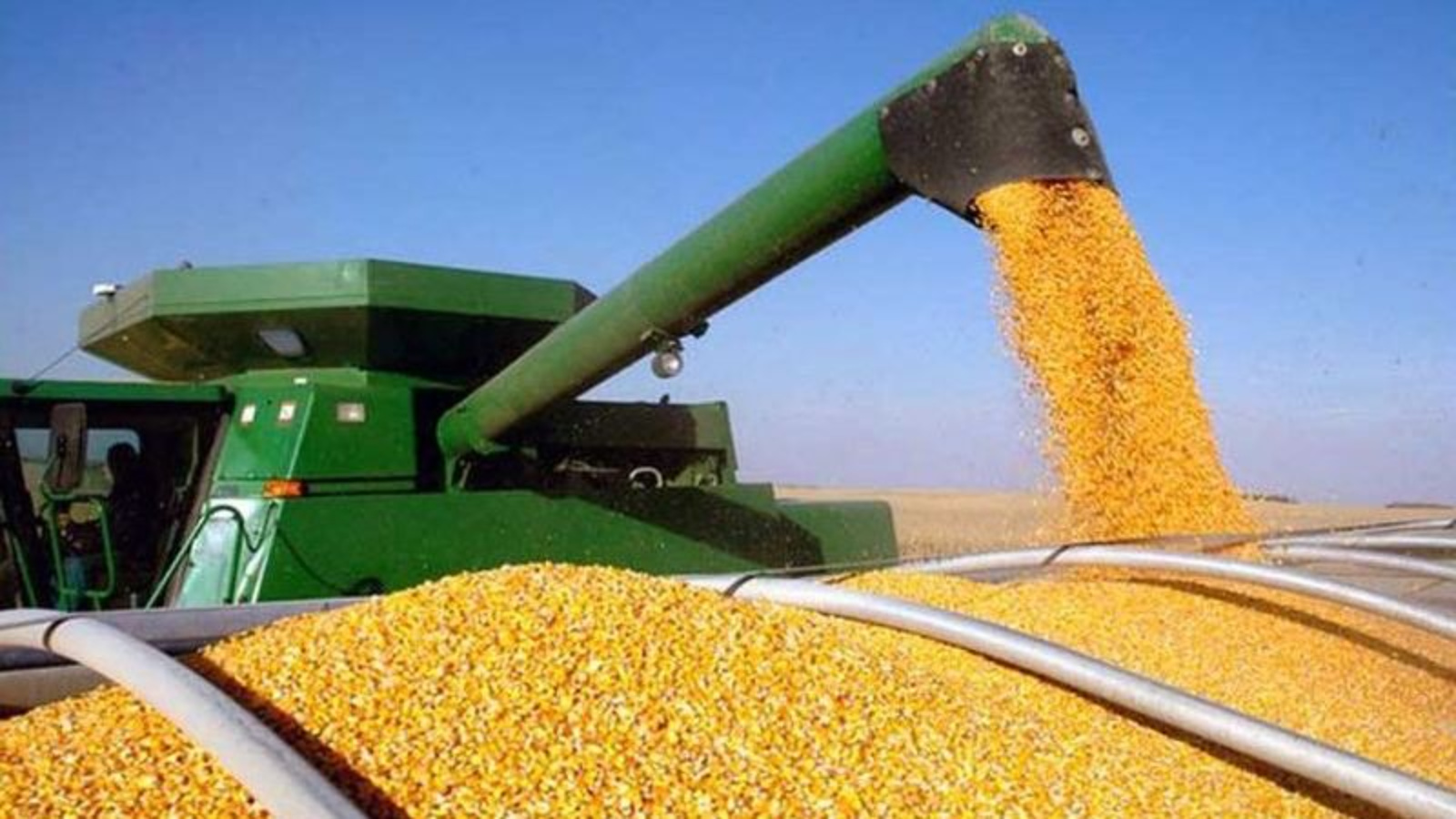
Deputy Prime Minister of the Republic of Tatarstan and Minister of Agriculture and Food Marat Zyabbarov reported on the progress of the industrial crop harvest, fallow cultivation, and the condition of winter crops at a meeting today at the Government House of the Republic of Tatarstan.
Rustam Minnikhanov held a videoconference meeting with all municipal districts of the Tatarstan Regional Council. Tatarstan Prime Minister Alexey Pesoshin participated in the meeting.
The upcoming harvest area is 146,000 hectares, including 86,000 hectares of sunflowers, 46,000 hectares of corn, 6,000 hectares of sugar beets, and 7,000 hectares of soybeans. Over the past two weeks, 38,000 hectares have been harvested—20% of the total area. Rain is complicating the harvesting.
Significant harvesting areas are located in the Muslyumovsky (11,000 hectares) and Aznakaevsky (9,000 hectares) districts. Over 7,000 hectares of harvesting area remain in the Aktanyshsky, Sarmanovsky, Aksubaevsky, and Bugulminsky districts.
Sugar beet processing continues. To date, 768,000 tons of raw material have been processed, producing 109,000 tons of sugar.
A total of 490,000 hectares of winter crops have been sown, of which 82% (403,000 hectares) are in good condition, 17% (83,000 hectares) are in satisfactory condition, and approximately 1% (5,000 hectares) are sparse. After the onset of frost, sugar content in the tillering nodes will be determined.
To date, 1,464,000 hectares, or 94% of autumn-wintered land, has been cultivated, including 560,000 hectares with deepened arable soil. More than 500 machines are in operation daily. More than 250,000 hectares remain to be cultivated.
For the 2026 harvest, farms have purchased 75,000 tons of mineral fertilizers—that's 15 kg of active ingredient per hectare of planned quantity. To meet the needs of farms across the country, the Russian Ministry of Agriculture and the Ministry of Industry and Trade annually approve a mineral fertilizer procurement plan for each region to prevent shortages.
The correct selection of varieties and seeds is a key factor. This ensures a yield increase of 10 centners per hectare or more. The sowing rate of high-quality seeds in the republic has remained at 38% in recent years—the third-highest rate in Russia. "We have room to grow. Not all farms can be seed producers." "The volume of elite seeds allows for the sowing of up to 50% of the acreage. Along with seeds, the use of modern agricultural technology solutions will significantly increase the profitability of the grain industry," the minister noted.
To support seed production, measures have been implemented in three areas. A total of 400 million rubles have been allocated from the budgets of Russia and Tatarstan this year.