The Republic of Tatarstan's contribution to land reclamation has received global recognition.
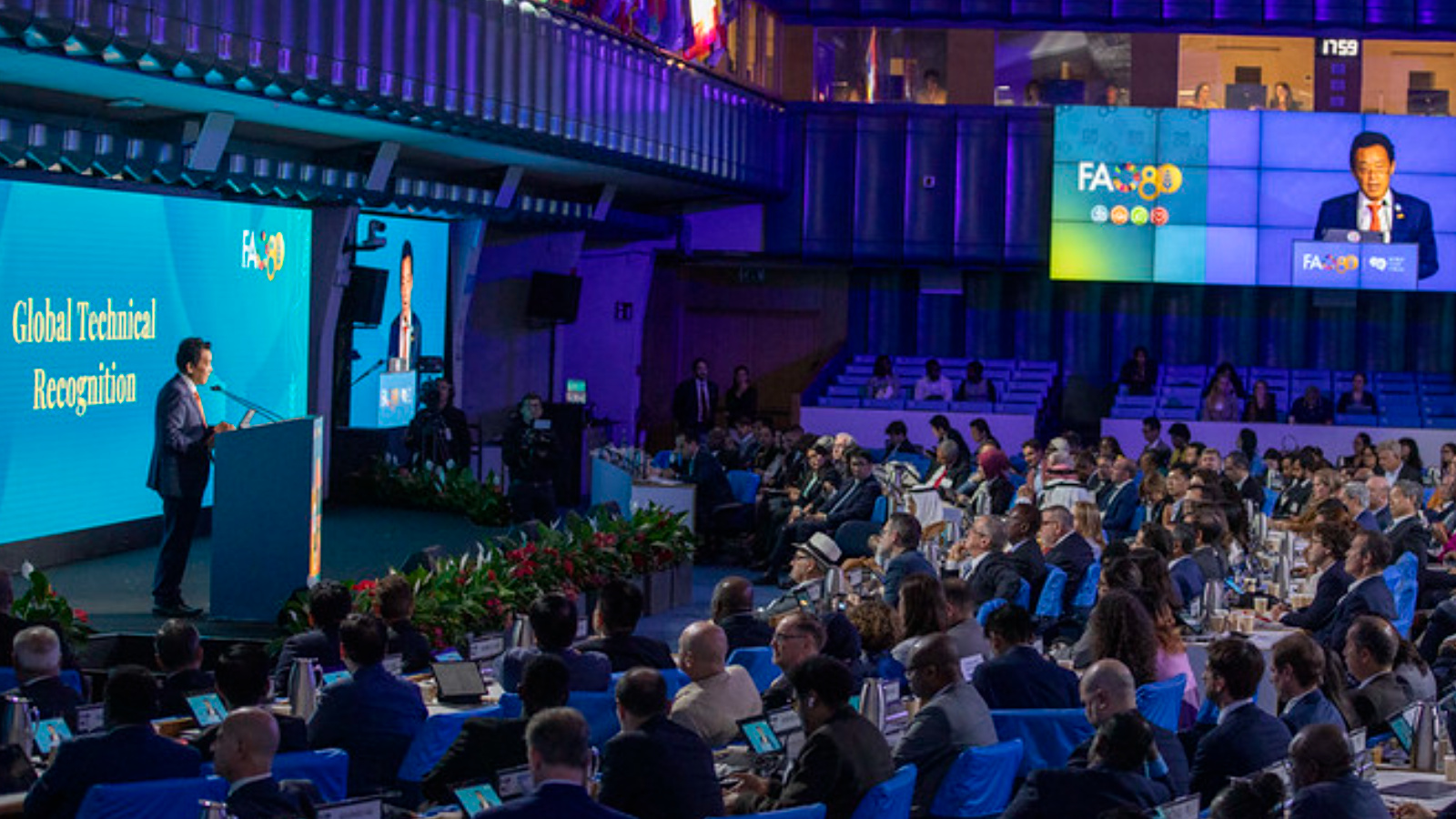
Tatarstan's agricultural scientists were among the laureates of the Global Technical Recognition Ceremony organized by the Food and Agriculture Organization of the United Nations (FAO). The event took place in Rome in October 2025 to celebrate the organization's 80th anniversary. The goal of the event was to disseminate best practices and successful solutions in land, soil, and water resource management to achieve sustainable agricultural development and improve food security.
The event was attended by heads of state, ministers, and representatives of science, business, and civil society – a total of more than 25,000 delegates from 150 countries.
The ceremony recognized 39 organizations from around the world that have achieved outstanding results in transforming agricultural and food systems. Among the laureates is Kazan State Agrarian University, whose large-scale project, implemented with the republic's land reclamation specialists to develop melioration in the Republic of Tatarstan, has received global recognition.
The work submitted by Kazan State Agrarian University, "Integrated Solutions for Land, Soil, and Water Resources Management," was recognized by the FAO expert community following an international selection process for organizations distinguished by high scientific and professional practices and the implementation of innovative methods that contribute to global food security.
The project presents a scientific rationale and comprehensive solution to the problems of melioration and the rational use of water and soil resources in the context of climate change, which is particularly relevant for ensuring food security and sustainable development of rural areas.
The work was carried out in close collaboration with the Federal State Budgetary Institution "Tatmeliovodkhoz Administration" (now "Privolzhskmeliovodkhoz"), OJSC "Tatmelioratsiya" Trust Company, with the support of the Ministry of Agriculture of the Russian Federation, the Government and the Ministry of Agriculture and Food of the Republic of Tatarstan.
The Foundation of Success: From Ponds to Digitalization
The project submitted to the competition is not just a theory, but a comprehensive program for the development of land reclamation in Tatarstan, implemented since 2012. Its essence lies in the implementation of a set of measures for regions with so-called "risky agriculture," where peak water consumption coincides with the dry summer period.
So what was accomplished? The numbers speak for themselves:
Infrastructure: Over 600 ponds and reclamation reservoirs out of the existing 880 were completely reconstructed, including 122 federally owned hydraulic structures; over 450 water protection zones were improved for Recreation and public spaces have been developed, resulting in the creation of comfortable and well-maintained recreation areas for city and rural residents, and a significant improvement in the overall environmental situation in water areas.
Technologies: A range of innovative, new-generation "KAZANKA" wide-coverage irrigation machines has been developed and launched into mass production, with 410 units manufactured and installed in various regions of Russia. Over a thousand hectares of intensive fruit and berry orchards are commissioned annually, where modern domestically produced drip irrigation systems with automated water distribution and digital irrigation control are being implemented.
Ecology: Agroforestry reclamation work has been carried out and protective shelterbelts have been planted over an area of over 30,000 hectares; 28,600 hectares of degraded lands have been reclaimed and restored; over 70,000 hectares of acidic soils are limed annually.
Science as an Engine of Progress
The project's particular pride is the creation of a unique scientific and meliorative system. The Agrobiotechnopark production site. Scientific support for integrated soil and water resource management solutions has yielded impressive results: in a short period, more than 50 scientific articles have been published in highly rated journals, over 10 patents have been obtained, and five candidate and doctoral dissertations have been successfully defended. A monograph, "Growing Agricultural Crops on Irrigated Lands," has been published.
Tangible Results for the Economy and the Environment
A scientifically based programmatic approach to land reclamation development and investments in integrated soil and water resource management solutions have yielded a significant multiplier effect. Thanks to the project:
The reliability of water management infrastructure has increased by 40%;
New irrigated land areas of 5,000-6,000 hectares are being brought into use annually; water savings from modern irrigation systems using domestically produced irrigation equipment reach 70%;
Farmland productivity has increased by 15-20%;
Soil erosion has been reduced by 25-30%;
More than 500 new jobs have been created.
This is a brilliant example of a successful partnership, where the combined efforts of science, business, and government simultaneously address economic, social, and environmental challenges. This is a testament to the years of work of our scientists and students, as well as confirmation of the leadership of Russian agricultural and land reclamation science on the international stage. The technologies we developed have already proven their effectiveness in Tatarstan and have great potential for implementation in other regions of Russia and abroad.
This FAO recognition is a testament to the international standing of Tatarstan's agricultural scientists and land reclamation specialists and a confirmation of the high qualifications of the specialists working on the development of land reclamation systems, soil, and water resources.
According to the Permanent Mission of the Russian Federation to the FAO, the project from Tatarstan was among the five projects awarded in this category.