In Tatarstan, specialists at the Central Agro-Industrial Complex (CAIC) branch are testing the baking properties of the new wheat harvest.
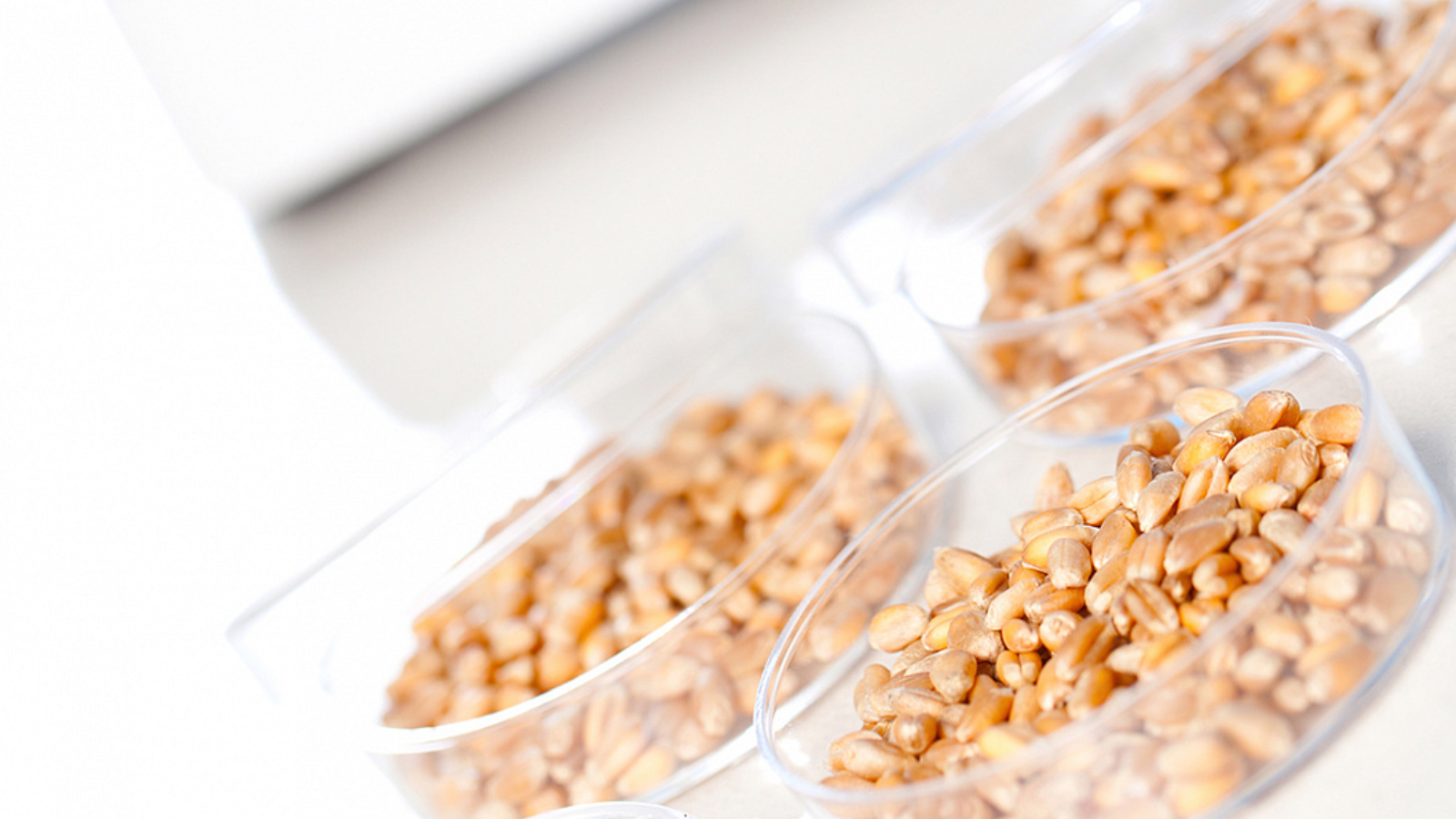
As of September 1, 2025, the testing laboratory of the Tatarstan branch of the Federal State Budgetary Institution "CAIC" in the Republic of Tatarstan has tested over 1,900 samples of winter and spring wheat from the selected new harvest, totaling 1.33 million tons, representing 64% of the current gross harvest (approximately 2 million tons).
Grain samples are being tested in accordance with Order No. 611 of the Russian Ministry of Agriculture dated September 8, 2021, "On Approving the List of Consumer Properties of Grain Produced in the Russian Federation for the Purposes of Conducting State Grain Monitoring." These tests cover 19 quality indicators, including gluten, bulk density, protein, falling number, vitreousness, moisture, foreign, grain, and harmful impurities, infestation, and contamination. Grain damaged by the tortoiseshell bug is also being identified.
"The test results showed the following distribution of wheat by class: 14.6% of the tested grain corresponded to class 3, 34.3% corresponded to class 4, and 50.9% was classified as class 5. The final wheat quality assessment will be made upon completion of the state harvest monitoring," explained Guzel Sagdeeva, head of the testing laboratory at the branch of the Federal State Budgetary Institution "CAIC" in the Republic of Tatarstan.
Experts note that the wheat is perfectly suitable for producing standard grade bakery flour, as it meets the requirements of GOST 9353-2016 "Wheat. Technical Conditions." For example, the gluten content of class 3 soft wheat averages 23% or higher, while class 4 soft wheat averages 18% or higher, with a grain density of 80-100 units. It has a grain specific gravity of at least 710 g/l, and a grain vitreousness of 40 to 50%.
It should be noted that the current harvesting campaign in the fields of the Republic of Tatarstan is taking place under extremely challenging conditions. Since the beginning of August, Tatarstan has received an average of over 88 mm of precipitation, with some areas receiving 100 mm, compared to the normal 55 mm.
As of September 4, according to the Ministry of Agriculture and Food of the Republic of Tatarstan, grain and leguminous crops (excluding grain corn) have been threshed on an area of 960,000 hectares, representing 78% of the planned harvest. The average yield across the republic remains at -40 centners per hectare.
Winter and spring wheat make the main contribution to the harvest results: the yield reaches 62.6% of all grain crops. The main focus of farmers is currently on harvesting spring wheat and other agricultural crops.
The wheat harvest grown in the region is undergoing full quality testing at the accredited laboratory of the Tatarstan branch of the Federal State Budgetary Institution "TsOK AIC." This year, as part of state grain monitoring, specialists are expected to conduct nearly 86,000 tests on 100% of the winter and spring wheat harvest. Specialists at the AIC Center for Quality Assurance (CQA) branch began collecting the first samples and conducting laboratory testing on July 15, the first day of the harvest. Currently, based on 1,295 notifications from farmers, staff have visited agricultural enterprises located in all 43 municipal districts of the republic.
Last year, grain quality monitoring results from the Tatarstan harvest showed that 55% of the harvest was milling wheat, and of the volume examined at the CQA Center for Quality Assurance (CQA) branch, 20% was third-grade wheat, 35% was fourth-grade wheat, and 45% was fifth-grade wheat.