Oksana Lut in Kazan: One of the main tasks is to create a base for selection
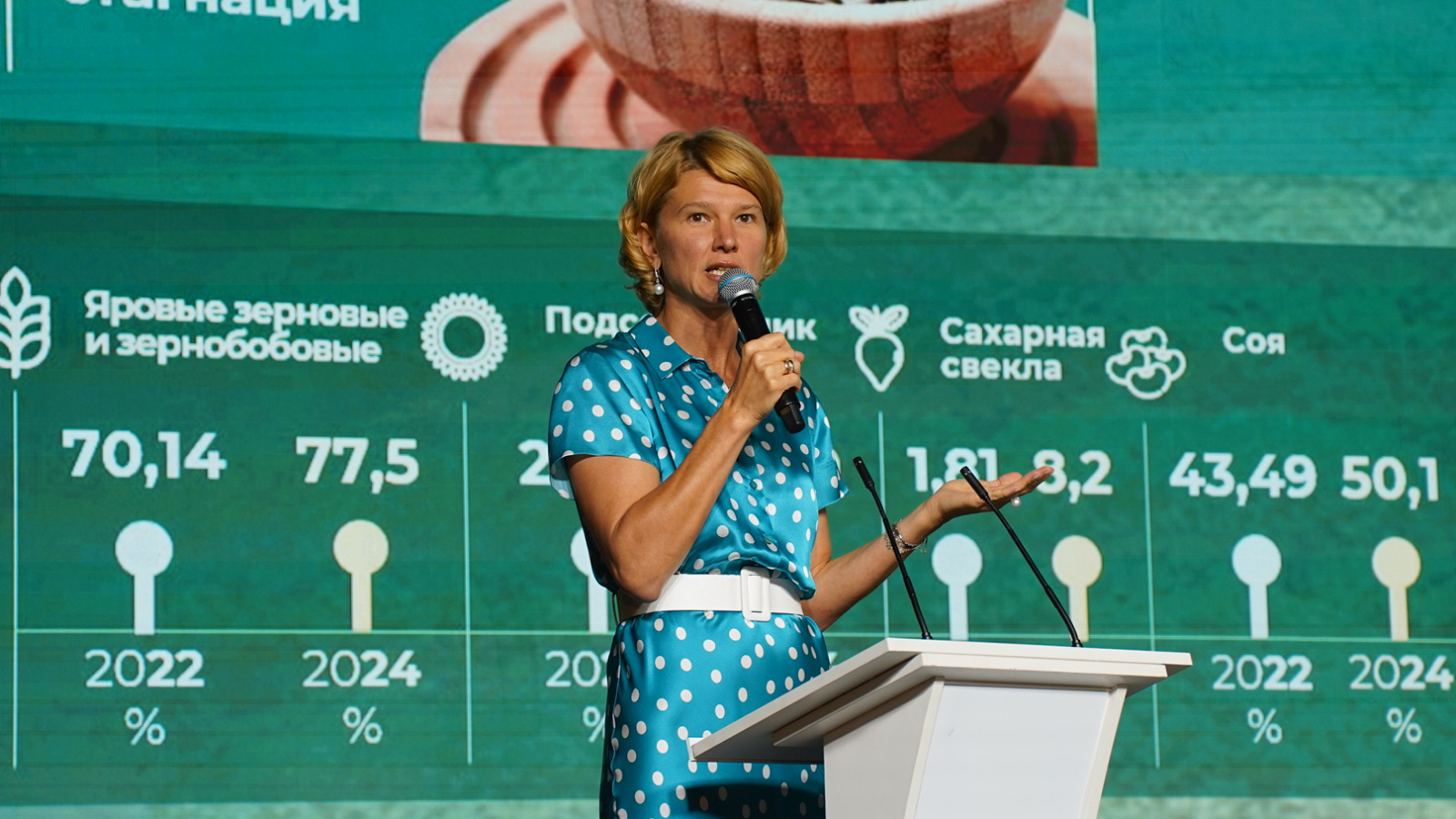
One of the main tasks in agriculture is to create a base for selection. This was stated by the Minister of Agriculture of Russia Oksana Lut at the plenary session of the All-Russian Forum of Breeders and Seed Growers "Russian Field - 2025" in Kazan.
"We do not have a base for selection. We can talk about acceleration, but if you do not have data, then you will do everything the old-fashioned way. The most important thing is information. Now it is not in the form in which it is needed," said the head of the federal Ministry of Agriculture.
Therefore, according to her, the task of the department for the near future is to create a platform, a database. "Information with which any breeder, scientific institute will be able to work. So that it is open," added Lut.
She emphasized that specialists are needed in the field of selection and seed production. "We need thinking people, who certainly exist in our country, but we need to gather them all together, make them feel comfortable and create," the minister specified.
In this regard, the Ministry of Agriculture has established work with 44 specialized universities. We are talking about joint programs that are adapted to modern challenges.
"Accordingly, we need new specialties. We understand that we need to work on improving qualifications. We are opening agricultural classes, because we need to involve people in the profession from childhood," Lut noted.
In her opinion, it is also necessary to change the attitude of young people to postgraduate studies and form a "scientific core" in universities.
"We need more breeders, developers, so that varieties from more people get into the selection and become the best. I believe that biological diversity is a driver for our further development," the minister concluded.
The development of agriculture corresponds to the goals of the national project "Technological Support of Food Security".
According to the national project “Technological Support for Food Security”, the goal is to increase the level of provision with domestically bred seeds to 75% by 2030.