"Agrovolga-2025": experts discussed effective management of forage production
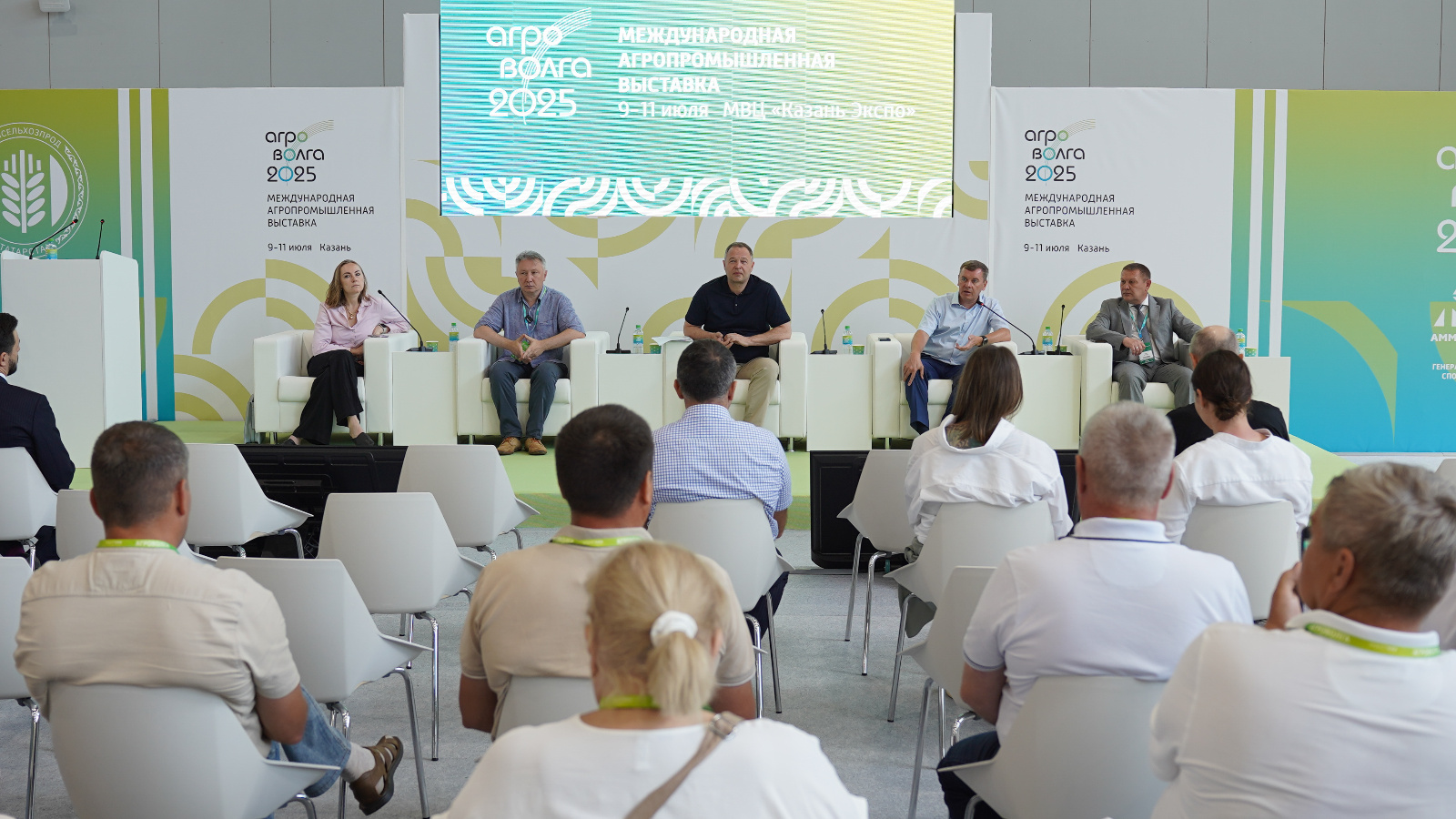
Today, Deputy Prime Minister of the Republic of Tatarstan - Minister of Agriculture and Food of the Republic of Tatarstan Marat Zyabbarov and Director of the Department of Livestock and Breeding of the Ministry of Agriculture of the Russian Federation Sergey Voskresensky visited the international agro-industrial exhibition "Agrovolga - 2025" and inspected the site where modern developments in agriculture and the food industry were presented. They also took part in the conference on forage production - "Efficient process management".
Sergey Voskresensky presented an overview of the feed market in Russia and the economics of their production. He focused on the national goals of ensuring the technological sovereignty of the country and the creation of new markets for agricultural products. In addition, Voskresensky touched on the topic of state support for feed producers and the prospects for increasing the production of agricultural products by at least a quarter, as well as a significant expansion of export supplies.
Then the floor was given to Deputy Minister Gelyus Bayazitov, who spoke in detail about Tatarstan's plans for the development of dairy cattle and poultry farming. According to him, by 2030 the republic plans to achieve milk production volumes of 2.6 million tons, meat - about 553 thousand tons, eggs - almost two billion pieces.
"One of the reserves for increasing milk production volumes is also the construction of feed centers. "A feed center is a new technology of work, not a set of machines," Gelyus Bayazitov emphasized.
These enterprises represent innovative technologies for organizing the nutrition of farm animals, allowing to significantly reduce feed costs and minimize the human factor
Then the director of "Krasny Mayak" Dmitry Zolotov shared his experience of optimizing animal feeding processes on the farm, emphasizing the importance of a scientifically based approach to the diet as a key element of successful agricultural business.
At the end of the conference, the participants discussed modern trends in approaches to feeding cattle, biotechnology issues in feed production, personalized rations to increase herd productivity.
They also shared their experience in developing feed production, optimizing animal feeding rations to increase the efficiency of a livestock farm.