The Ministry discussed measures to prevent the introduction of especially dangerous diseases of animals and birds into the territory of the republic
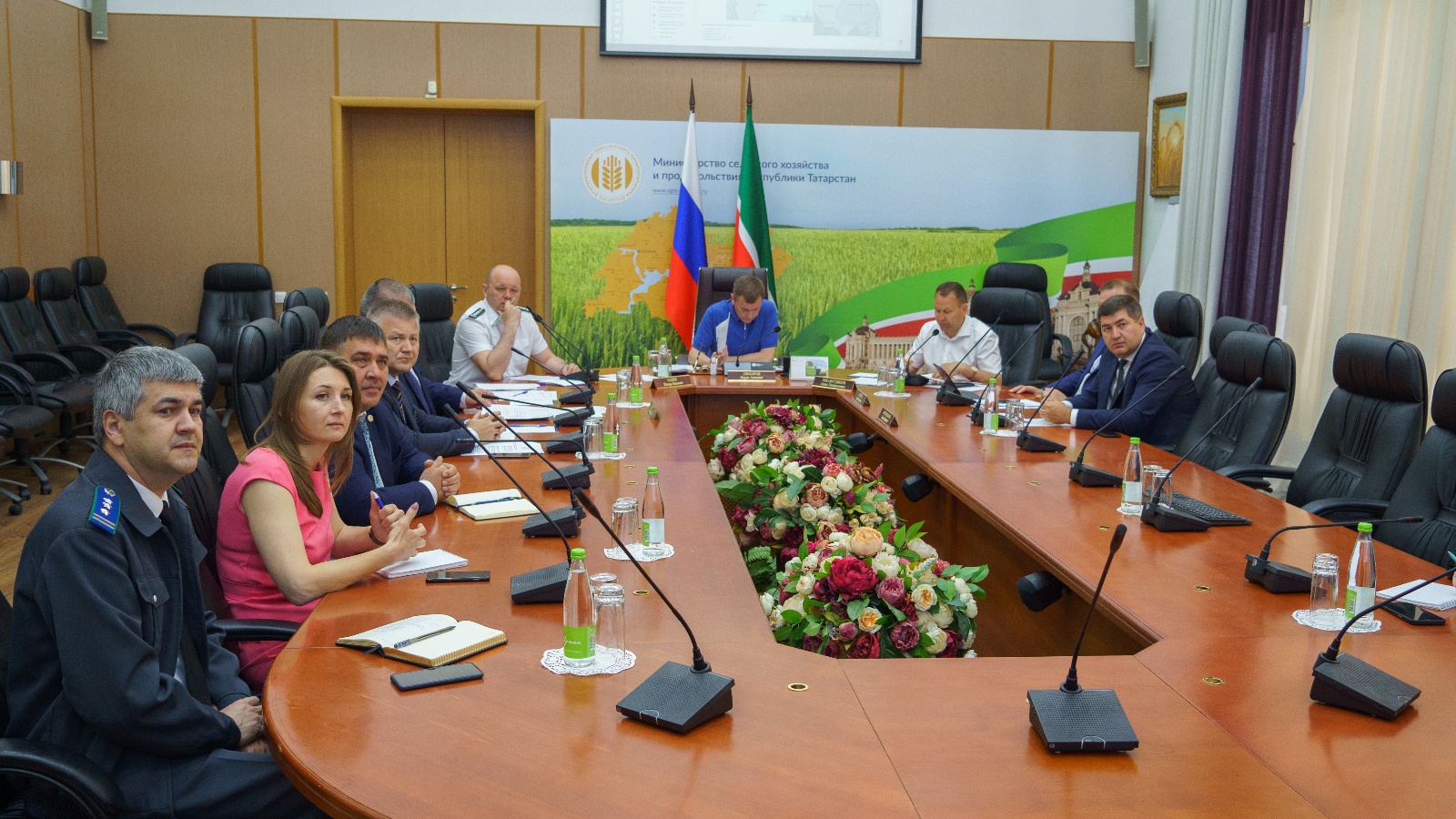
Today, the Deputy Prime Minister of the Republic of Tatarstan, Minister of Agriculture and Food of the Republic of Tatarstan Marat Zyabbarov held a meeting of the republican headquarters to prevent the penetration and spread of contagious, including especially dangerous, animal diseases on the territory of the Republic of Tatarstan. It was attended by Deputy Minister Lenar Garipov, Head of the Main Department of Veterinary Medicine of the Cabinet of Ministers of the Republic of Tatarstan Almaz Khisamutdinov, Head of the Office of the Rosselkhoznadzor for the Republic of Tatarstan Ilnur Galeev, heads of district agricultural departments, heads of pig and poultry farms.
“Over the past 5 years alone, starting from 2017, 980 foci of African swine fever have been registered in the Russian Federation, including 613 among domestic pigs and 367 among wild boars. This year, 26 foci of this infection have already been registered, including 9 among wild boars and 17 among domestic pigs. Currently, 10 regions are unfavorable for ASF - these are Volgograd, Omsk, Orel, Rostov, Yaroslavl, Chelyabinsk, Samara, Saratov regions, Stavropol Territory and Khanty-Mansi Autonomous Okrug," Almaz Khisamutdinov noted in his report.
For avian influenza, 270 outbreaks were registered for the period from 2017 to 2021, including 241 among poultry and 29 in wild fauna. Since the beginning of 2022, avian influenza has been detected in 9 unfavorable locations.
An analysis of the epizootic situation in Russia indicates a high risk of further spread of ASF and avian influenza.
In this regard, heads of pig farms are recommended to strengthen biological protection measures, comply with the rules for keeping pigs, the Office of the Federal Penitentiary Service to increase the protection of their farms, or engage in alternative types of animal husbandry.
During the meeting, by decision of the permanent anti-epizootic commission of the Government of the Russian Federation, the governments of the constituent entities of Russia decided to create 30-kilometer buffer zones around pig-breeding enterprises free from wild boars. The State Committee of the Republic for Biological Resources should conduct weekly monitoring of these zones.
Addressing the heads of livestock enterprises for the maintenance of cattle and small ruminants, a demand was voiced to exclude unauthorized purchases of animals without the consent of the veterinary service and Rosselkhoznadzor.