An expanded meeting of the Anti-Corruption Commission was held at the Ministry
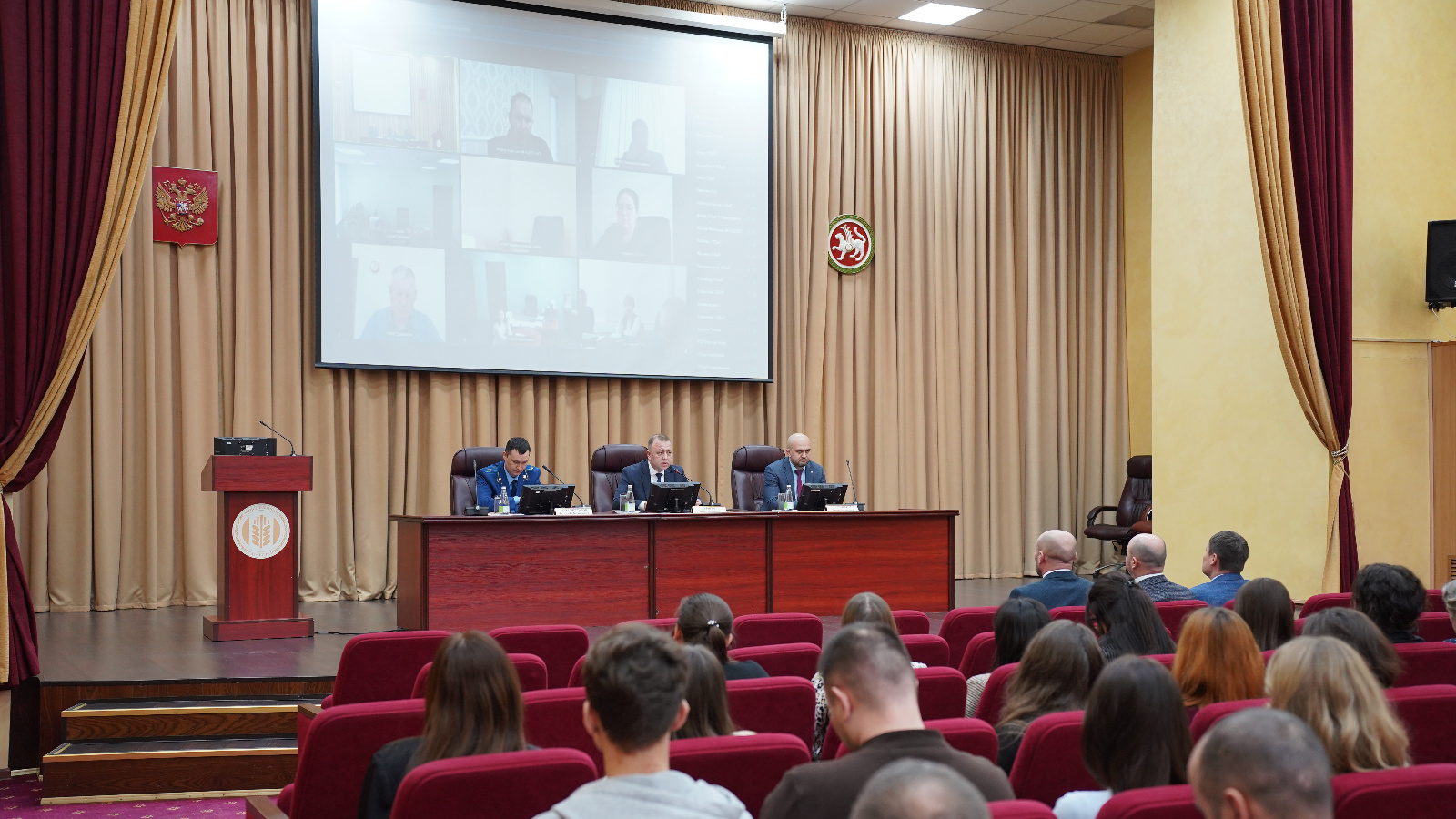
Today, an expanded meeting of the Anti-Corruption Commission under the Deputy Prime Minister of the Republic of Tatarstan - Minister of Agriculture and Food of the Republic of Tatarstan was held at the Ministry together with the Tatarstan Regional Directorate for Anti-Corruption Policy.
The meeting was attended by Lenar Garipov, First Deputy Minister of Agriculture and Food of the Republic of Tatarstan; Timur Khalimdarov, Chief Advisor of the Anti-Corruption Monitoring Department of the Tatarstan Regional Directorate for Anti-Corruption Policy; Rustem Mukhametdinov, Prosecutor of the Anti-Corruption Law Enforcement Department of the Tatarstan Regional Prosecutor's Office; staff of the Tatarstan Ministry of Agriculture; the Main Veterinary Department of the Cabinet of Ministers of the Republic of Tatarstan; and the State Technical Supervision Department of the Tatarstan Ministry of Agriculture. The boards of agricultural enterprises of the Ministry of Agriculture of the Republic of Tatarstan joined the event via videoconference.
Lenar Garipov, First Deputy Minister of Agriculture and Food of the Republic of Tatarstan, addressed the participants with a welcoming speech, noting the importance of anti-corruption education today.
In his speech, Timur Khalimdarov discussed the changes to anti-corruption legislation regarding the provision of information on income, expenses, and property liabilities, which provide for the abolition of the annual declaration in the previous format.
Rustem Mukhametdinov, Prosecutor of the Department for Supervision of Compliance with Anti-Corruption Legislation of the Prosecutor's Office of the Republic of Tatarstan, presented the results of prosecutorial oversight of compliance with anti-corruption legislation in the Republic of Tatarstan for 2025.
In conclusion, Lenar Garipov emphasized that compliance with anti-corruption standards is a fundamental responsibility of every employee, regardless of their position. We will also continue to develop measures aimed at preventing and detecting violations in the agricultural sector.
Attendees actively participated in the lecture, asking questions and discussing various aspects of the problem of corruption.