Preparing Bees for Winter
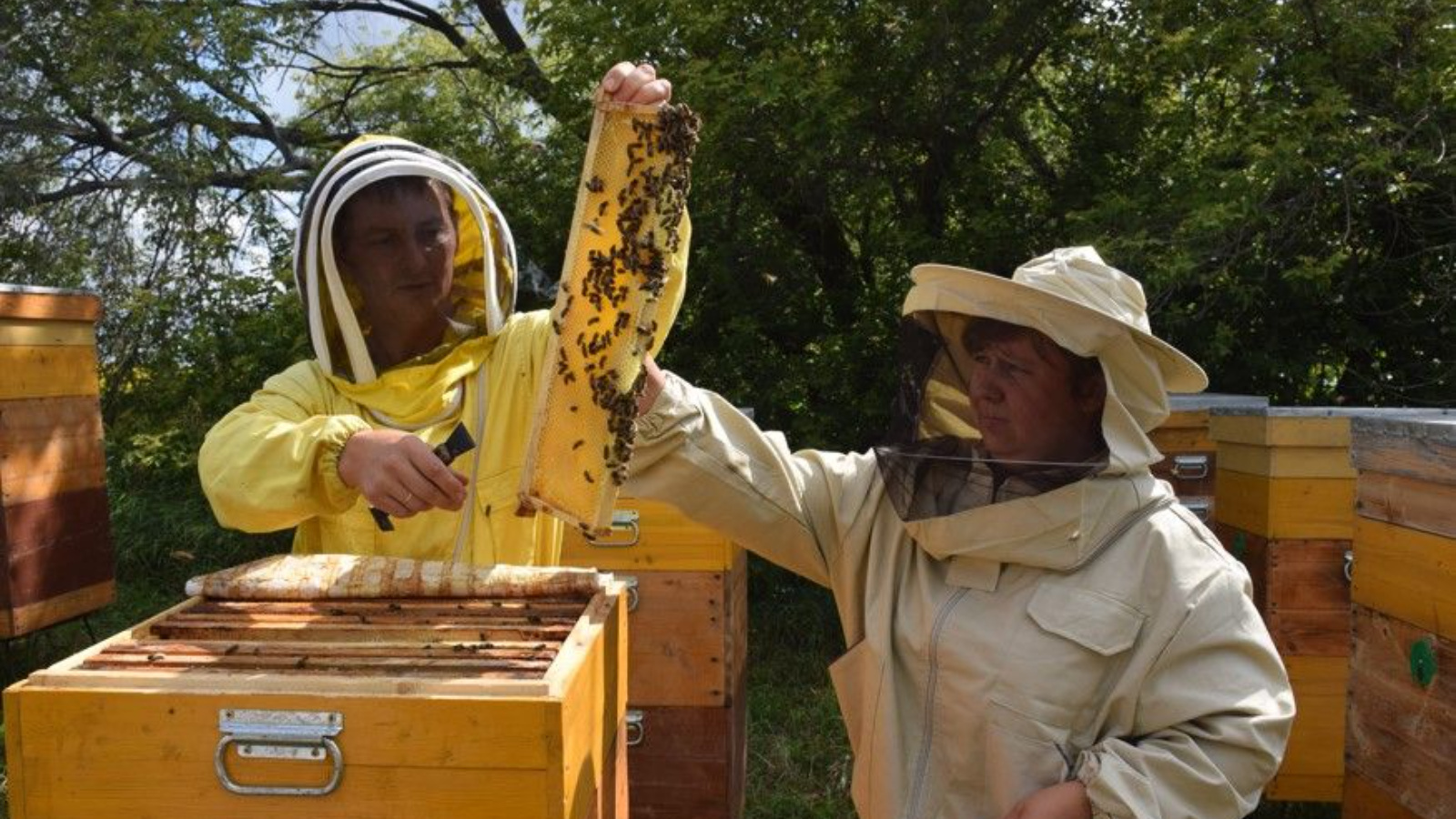
The bees are moved to the wintering house when the weather cools, dropping to -5°C in the morning. A clear day is chosen for the removal. The hives are arranged in the wintering house so that the warmer upper racks contain the weaker colonies and the nucleus colonies with spare queens, while the stronger colonies are on the lower racks.
A thorough inspection of the nests, conducted immediately after the last autumn honey flow, is commonly referred to as the main autumn inspection. This is the starting point for all work related to the autumn development of the colonies and the wintering of the bees. This includes determining the amount of honey and bee bread reserves, the strength of the colonies, the quantity and quality of the brood (the presence and quality of the queen), and the quality of the combs (light brown combs are ideal for wintering). The period between the main autumn inspection and the end of the apiary season should be used to best prepare the apiary for winter. This involves not only overwintering techniques but also creating conditions that preserve the greatest possible supply of vital energy for the following spring. The honey production of the coming season will depend on this. A colony that is well prepared biologically will withstand the difficulties of wintering significantly better.
It is essential to pay close attention to the quantity and quality of feed. Beekeepers wisely supplement their winter feed with invert sugar, rather than with simple sugar syrup of any given concentration. In late September and early October, the bee colonies are inspected for the final season and the final nest assembly for winter is completed. Frames with low honey content and those free of brood are removed from the hives, and frames containing stored food are added to the nests, leaving at least 2 kg of honey in each frame when wintering in a moss house and 2.5 kg when wintering outdoors or in cold rooms. In regions with longer cold periods, it's best to increase the amount of winter feeding. If there isn't enough food, the bees will starve. Depending on the length of the winter, a hive requires 15 to 30 kg of honey to survive. However, be prepared for a shortage of honey; learn how to make bee pomade—it's an excellent way to provide your bees with food and ensure they don't go hungry. Pomade has many advantages: unlike syrup, it's dry, so the bees can use it immediately. Unlike syrup, it doesn't increase the humidity in the hive.
Beekeepers make a serious mistake when treating bees in October. While this is important, it's too late, as the bee going into winter is already bitten by mites and may not survive until spring.
Bee diseases can be caused by various factors, such as infections and parasites. The most common diseases are ascopherosis, nosematosis, and narroatosis. Sick bees lose weight, become weak, and lose the ability to fly. If such bees are present in the hive, they should be removed. A sick bee that remains in the hive will infect other inhabitants during the long winter. As a result, the beekeeper can lose the entire colony.
Unfinished frames with little honey should be removed from the hive and replaced with new, disinfected frames. To do this, first clean the frames of dust and honeycomb debris, then bring them into a warm room.
The frames selected for treatment are placed vertically at a slight angle. Using a sprayer (a regular garden one can be used), spray the frames on both sides with a warm disinfectant solution (3% hydrogen peroxide with 0.5% formic or acetic acid added to enhance the peroxide's action), aiming to fill the cells. The hive equipment and tools are disinfected with the same hydrogen peroxide solution twice, 1 hour apart, at a rate of 0.5 liters per square meter. The hives are treated inside and out using the same procedure. First, they are mechanically cleaned using stiff brushes and scrapers, and then sprayed with the solution.
Alternative disinfection measures in the apiary without the use of chemicals are becoming increasingly popular among beekeepers. Germicidal lamps emitting ultraviolet rays are used for this purpose. For bactericidal treatment, the honeycombs are hung on storage racks after mechanical cleaning, and the lamp is installed horizontally at a short distance. A bactericidal lamp can also be used to disinfect the hive. Ozonation can be used to disinfect frames and beekeeping equipment. Small portable ozonizers are typically used for this purpose. Depending on the power of the device, the process will take from 3 hours to 24 hours.
In winter, pests such as rodents, cockroaches, and ants can enter the hive in search of food and warmth. This occurs in both cold and mild climates. It is important that the hives are not placed on the ground, but rather raised above it; mouse or rat traps can also help. If you use hay bales as windbreaks or insulation, be careful to prevent rodents from settling in them for the winter.