The Ministry summarized livestock production results for the first eight months of the year.
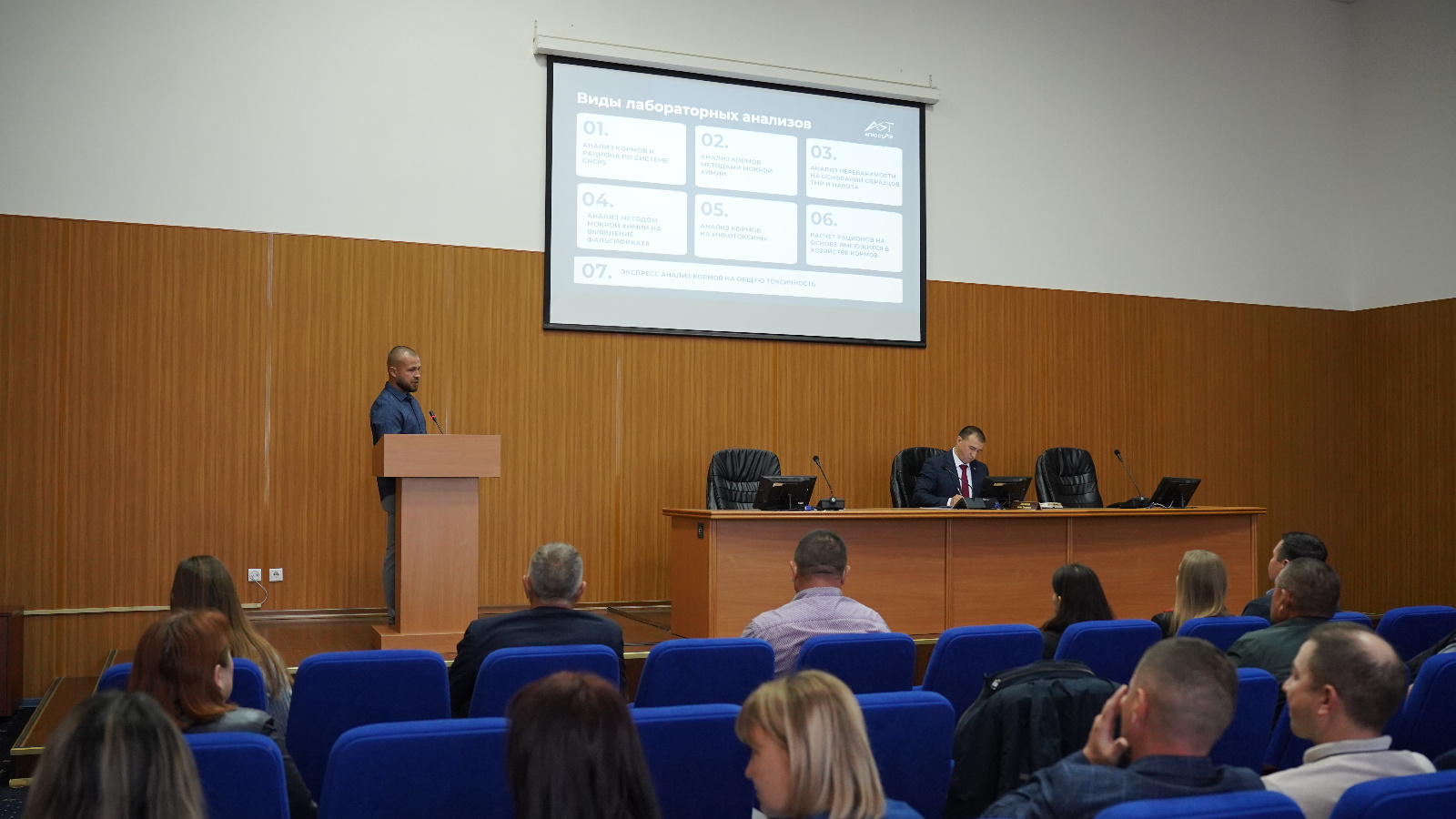
Today, the Ministry of Agriculture and Food of the Republic of Tatarstan held a meeting to discuss livestock production results for the first eight months of the current year. The meeting was attended by Ministry of Agriculture and Food employees, including Siren Nigmatzyanov, Head of the Livestock Development Department, and Damir Minnebayev, Head of the Animal Breeding and Reproduction Department. Also present were livestock consultants, heads of selection and breeding services for municipal agricultural and food departments, and other relevant officials.
Siren Nigmatzyanov, Head of the Livestock Development Department, reported that 1,253,000 tons of milk were produced in the republic's agricultural enterprises in the first eight months of the year, there was a 6% increase compared to 2024. The average milk yield per cow was 5,936 kg, a 7% increase compared to last year. Meat production totaled 280,000 tons, a 101% compared to last year. Cattle and pork production showed positive trends, up 1% and 5%, respectively. Poultry production was 754 tons below last year's level, 99% below 2024 levels.
Pig, sheep, and goat numbers showed positive trends. Compared to last year, the pig population increased by 2,024,000 head, while the sheep and goat population increased by 3,000 head, or 5% and 6%, respectively.
Nineteen municipal districts increased their cow population to 2024 levels. Cow populations continue to increase in the Atninsky, Kaibitsky, Mamadyshsky, and Menzelinsky districts of Tatarstan.
Pig populations in the republic are concentrated in nine districts. As of September 1 of this year, they housed more than 484,000 pigs, an increase of 23,000 compared to the 2024 level. The largest increases were in the Tukaevsky and Buinsky districts, with increases of 16,500 and 6,000 head, respectively.
Twenty municipal districts increased their horse populations. The largest increases were in the Sabinsky, Tyulyachinsky, and Leninogorsky districts, with an increase of more than 90 head compared to 2024.
Siren Nigmatzyanov then focused on milk production. The Atninsky, Mamadyshsky, Menzelinsky, and Kukmorsky districts recorded the largest increases compared to the 2024 target. High growth rates were also observed in the Kaibitsky and Zelenodolsky districts.
Damir Minnebayev, Head of the Animal Breeding and Reproduction Department, then delivered a report. He cited the Atninsky (1,999 calves), Kaibitsky (1,490 calves), Mamadyshsky (934 calves), Menzelinsky (904 calves), and Baltasinsky (854 calves) districts as examples of regions showing steady positive growth in calf numbers and milk production. The increase in calving was primarily due to both imported heifers and the region's own reproduction.
"Based on the results of eight months of operations, 172,400 calves were produced. 688,600 piglets were produced. 17,700 lambs were produced. 3,000 foals were produced," he noted.
Damir Minnebaev also reported on the reproduction situation on private farms and cited examples of successful organizational work on cow insemination in various districts of the republic. Artificial insemination coverage was 107% of last year's level.
The meeting also addressed issues of mortality and offspring.
At the end of the meeting, the Ministry's leaders emphasized the need to exercise particular control over livestock management and feeding practices, as well as the importance of timely reporting on the production of milk, eggs, poultry, pigs, and cattle," they noted.