The Ministry held a meeting for preventing the penetration and spread of especially dangerous diseases of animals and birds
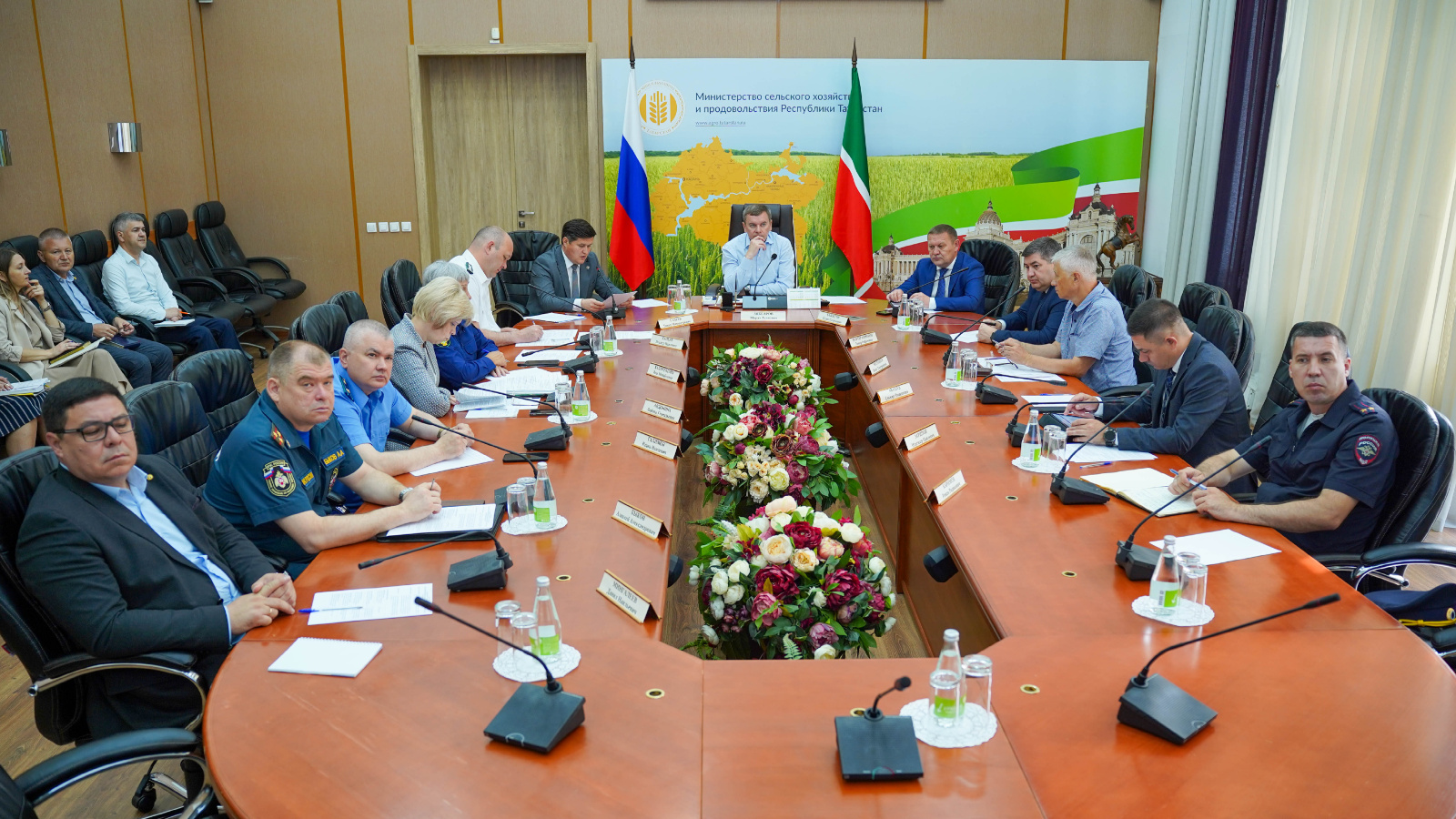
Today, the Ministry of Agriculture and Food of the Republic of Tatarstan held a meeting of the republican headquarters for preventing the penetration and spread of especially dangerous diseases of animals and birds. The event was chaired by Deputy Prime Minister of the Republic of Tatarstan - Minister of Agriculture and Food of the Republic of Tatarstan Marat Zyabbarov.
It was also attended by representatives of the Main Veterinary Department of the Cabinet of Ministers of the Republic of Tatarstan, the Office of the Federal Service for Veterinary and Phytosanitary Surveillance in the Republic of Tatarstan, the Department for the Protection of Animal and Plant Life of the State Committee of the Republic of Tatarstan for Biological Resources, and heads of municipalities, heads of departments of agriculture and food, heads of veterinary associations, heads of rural settlements, heads of agricultural enterprises, entrepreneurs engaged in the resale of animals joined in via videoconference.
Marat Zyabbarov instructed to carry out measures to eliminate outbreaks in accordance with veterinary rules for combating animal brucellosis as soon as possible.
According to him, it is necessary to carry out work on the unauthorized import of large and small cattle without veterinary documents, as well as from disadvantaged regions.
The Minister emphasized that the heads of livestock enterprises must ensure biological protection of their enterprises in the form of a "closed type", prevent unauthorized purchase of cattle from resellers, quarantine imported cattle and do not allow unauthorized persons into the territory.
The Head of the Main Veterinary Department of the Cabinet of Ministers of the Republic of Tatarstan Timur Galeev spoke about the epizootic situation in the Russian Federation and measures to prevent the spread of dangerous animal diseases brucellosis and rabies.
He reported on the necessary rules for the import of farm animals: "Coordination of import with the Main Veterinary Department of the Cabinet of Ministers of the Republic of Tatarstan; the region from which the import is carried out must be free of infectious animal diseases; coordination of the route with the territorial office of Rosselkhoznadzor; a veterinary accompanying document is issued for each batch of imported cattle; control of the arrival of cattle by the veterinary service of the district; registration for control and quarantine measures," said Timur Galeev.
He attributed free preventive vaccination of domestic and farm animals, immunization of wild carnivores, laboratory testing of pathological material, explanatory work with the population and the isolation of domestic animals that have bitten people to measures for the prevention of rabies.
The head of the Federal Service for Veterinary and Phytosanitary Surveillance in the Republic of Tatarstan, Ilnur Galeev, reported on the measures taken for the biological protection of enterprises from the introduction of especially dangerous and contagious animal diseases.
Head of the Department for the Protection of Fauna and Flora of the State Committee of the Republic of Tatarstan for Biological Resources Rinat Chispiyakov spoke about the measures taken to prevent the introduction and spread of African swine fever and rabies.
At the end of the event, Marat Zyabbarov instructed to strengthen control over the implementation of biological protection conditions by poultry farms and in the territory under their jurisdiction to identify dead and sick birds, as well as to ensure the shooting of wild birds to monitor the epizootic situation and the collection of samples from shot birds and their diagnostic studies.
He also noted the need to continue measures to prevent African swine fever: "The Committee for Bioresources should continue shooting wild boars. Particular attention should be paid to the regions of the republic bordering on neighboring regions. Keep the territories of buffer zones of pig-breeding enterprises and farms under control. Rosprirodnadzor should take control of regulating the number of wild boars in the territory under its control. To the heads of all pig-breeding enterprises and farms: ensure maximum biological protection, import pigs only from safe regions and with the approval of the veterinary department,” the minister emphasized.