In Tatarstan, 10 districts have already entered to the fields
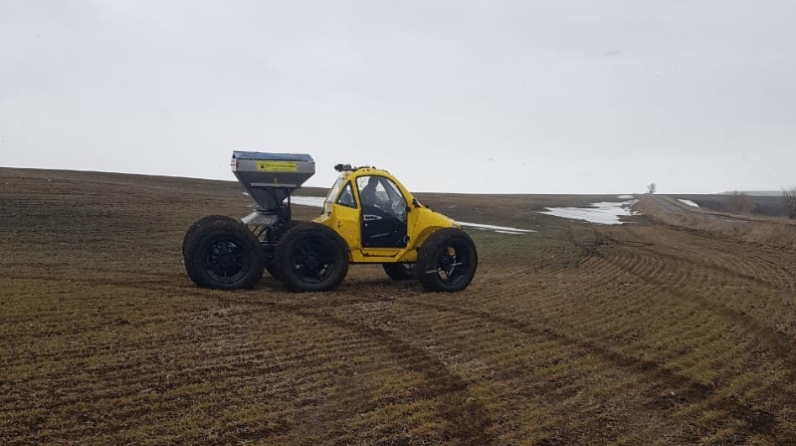
The Ministry of Agriculture and Food of the Republic of Tatarstan informs that feeding of winter and perennial grasses continues in Tatarstan. Today, farmers of Aktanyshsky, Chistopolsky, Aznakaevsky, Buinsky, Vysokogorsky, Muslyumovsky, Alekseevsky, Arsky, Tetyushsky districts have begun their work.
For example, on March 28, 2008, agrarians of the republic launched the feeding of winter crops and perennial grasses. Fertilizing winter crops was carried out on an area of 1.3 thousand ha, perennial – 0.1 thousand ha. Yield this year was 37.2 t / ha, gross harvest – 6321.4 thousand tons.
Today, winter crops in the republic are fed on an area of 2.7 thousand ha, perennial – 1.3 thousand ha. This year, winter crops will be fed on an area of 486.7 thousand ha, perennial grasses – on 484.1 thousand ha.
The Ministry of Agriculture and Food of the Republic of Tatarstan reminds that in Tatarstan, agricultural producers can receive budget funds for the purchase of mineral fertilizers for the 2020 crop. This money will be received by farms that accumulate at least 35 kg of the active substance of mineral fertilizers per hectare of sown area.
We remind you that this year the task was set to accumulate over 70 kg of active substance per hectare. Therefore, areas with low rates need to work on this. Mineral fertilizers are the basis for obtaining high crop yields and replenishing the removal of mineral elements from the soil. Fertilizers not only increase productivity, but also improve its quality: the content of sugars, fats and proteins, as well as biologically active substances, increases. Therefore, in areas where the work on the accumulation and application of mineral fertilizers is carried out in insufficient volume, it is necessary to pay more attention.
For reference:
Inlay is a technological technique that provides the comprehensive preparation of seed material for sowing. It lies in the fact that a thin film of a foaming agent dissolved in water is applied to the surface of the seeds. This film protects seeds from harmful effects. It closes access to them by pathogenic microorganisms and protects against mechanical damage and exposure to aggressive environments.