Nikolay Titov held a working meeting with the delegation from Germany on the project of cultivation and processing of African catfish in Tatarstan
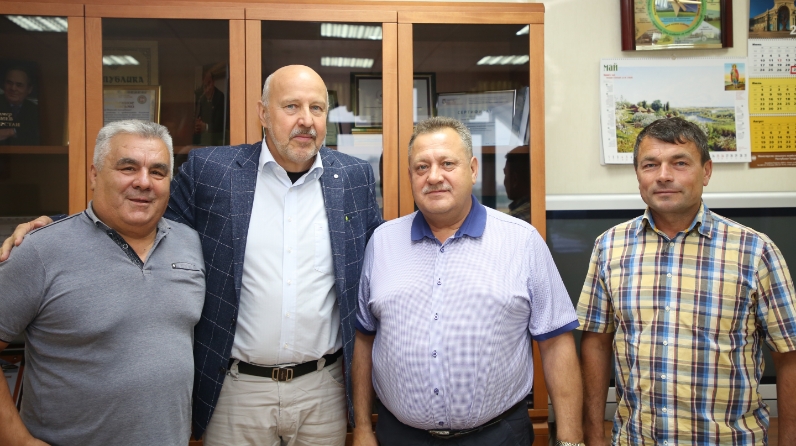
Today, the First Deputy Minister of Agriculture and Food of the Republic of Tatarstan, Nikolay Titov, met with a delegation from Germany headed by Dr. Günter Scheibe on a large project to grow African catfish in Tatarstan and further its processing.
The German company “Aquaculture” is known for its innovative technologies of growing fish in closed-cycle plants. Since 2017, the development and implementation of a project on growing fish using similar technologies in the Kama-Ustyinsky district of Tatarstan began, and in January 2020, with the support of the Ministry of Agriculture and Food of Tatarstan and the investor Islam Valiev, they plan to fully launch the plant.
“Tatarstan has been cooperating with the German city Ludwigslust for many years. Businessmen from Germany constantly come to us, and our businessmen go to Germany to exchange experience. So, once, through our German friends, we went to Dr. Gunther Scheibe - Europe's leading expert on breeding African catfish, ”explained the project curator in Tatarstan Nail Sirazayev.
The author's technology of Dr. Günther Scheibe will be used in Russia for the first time. German and Russian equipment will be installed at the plant. “This will be the first Russian catfish breeding enterprise with such a turnover,” said Dr. Gunter Scheibe.
He also said that the African clarium catfish can reach a mass of 1.5 kg in 5 months, and the control of the hydrochemistry of water, feed and fish health precludes the possibility of accumulation of substances harmful to human health in commercial products. The meat of the African catfish is considered dietary, has no smell and taste inherent in ordinary fish, and the absence of small bones and scales facilitates cooking.
In December of this year, the company plans to bring the breeding stock and fry of fish. “Each individual has its own passport, which contains detailed information on the origin and feeding of fish. Further fish farming will be continued in Tatarstan, ”explained Dr. Gunter Scheibe.
During the meeting, a number of aspects of the project implementation were resolved: the purchase of necessary equipment, construction of a workshop in accordance with Russian sanitary and epidemiological standards, veterinary certification, and the procedure for importing breeding stock for winter conditions.
At the end of the event, Nikolay Titov wished the German side success in the project.