The Ministry of Agriculture discussed measures to support fur-bearing animal farming
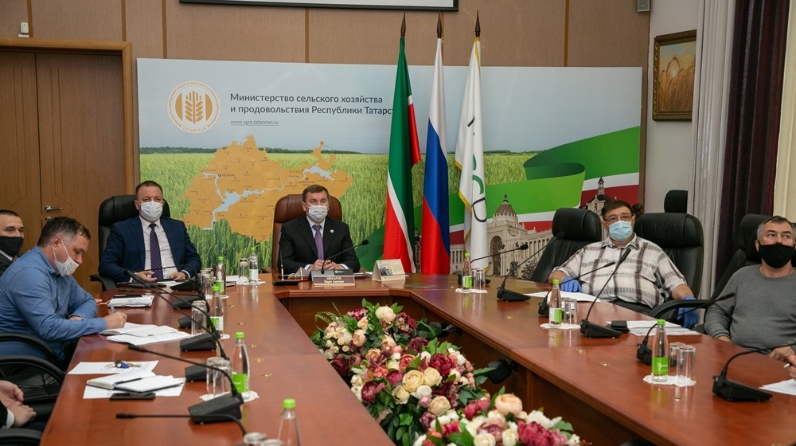
A meeting was held at the Ministry of Agriculture of Russia on the development of the sub-sector of fur-bearing animal farming. The event was chaired by the First Deputy Minister of Agriculture Dzhambulat Khatuov, the Deputy Prime Minister of the Republic of Tatarstan - Minister of Agriculture and Food of Tatarstan Marat Zyabbarov and representatives of enterprises involved in fur farming in Tatarstan.
During the meeting, it was noted that the sub-industry is a traditional and integral part of the country's livestock complex. Currently, 36 enterprises are engaged in fur farming. The main production is concentrated in the Tver, Kaliningrad, Kirov regions, the Republic of Tatarstan and Udmurtia, as well as the Stavropol Territory. Breeding stock has about 352 thousand heads. In the structure of breeding species of cellular fur animals, 83% are minks, 13% are sables, 3% are foxes and arctic foxes, 1% are ferrets, raccoon dogs and chinchillas. Breeding work is carried out by 19 enterprises, 20 breeds and types are bred on the sites of which fur-bearing animals.
In Tatarstan, 3 enterprises are engaged in fur farming. They contain 30.7 thousand heads of females of the main herd, 18 thousand of which are minks, 366 arctic foxes, 2,1 thousand foxes and 10, 2 thousand sables. 150 people work in the animal husbandry industry of the republic.
The animal breeding sub-sector turned out to be one of the most affected during the coronavirus pandemic due to a sharp decline in demand for fur products. For the efficient operation of animal husbandry enterprises, the department reviewed and formed additional support measures.
As a result of the meeting, the regional agro-industrial complex management bodies were tasked with developing specialized departments and industry unions to prepare indicating measures to support fur farming and the timing of their implementation.